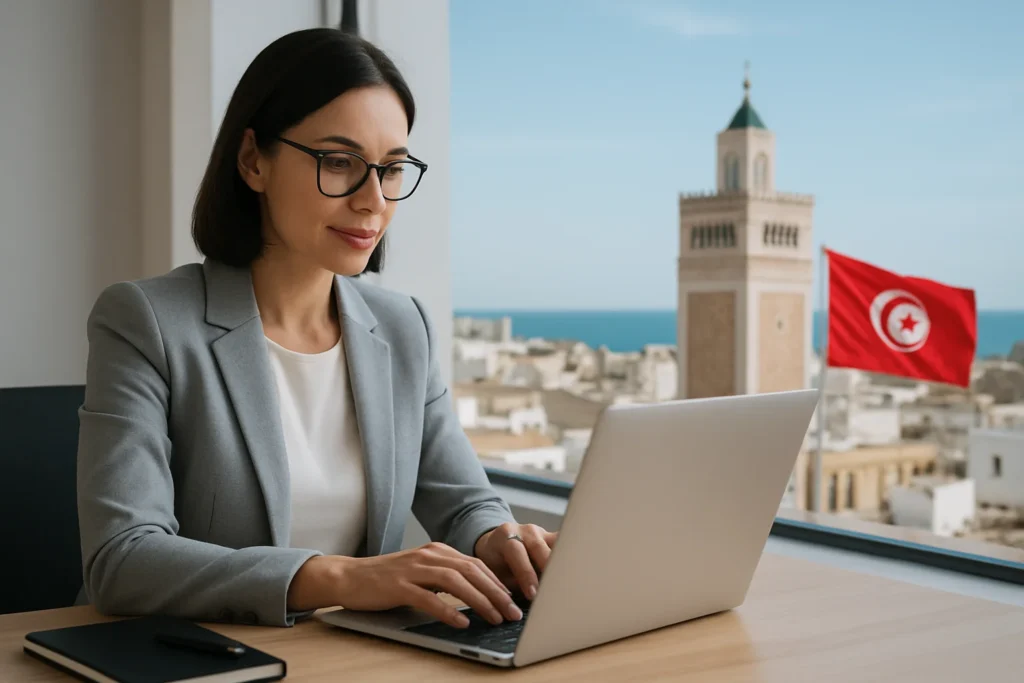
The real problem is not only finding French-speaking developers. It is finding a country that gives you strong delivery capacity, clear communication, and enough technical depth to support your product roadmap without creating new management overhead.
For European companies, the best choice depends on more than salary levels. Time zone alignment, cultural fit, seniority availability, code ownership, security standards and long-term collaboration all matter. A cheap team that slows execution is not a saving. It is a delayed invoice.
Quick answer: which country is best?
In short: the best country to hire French-speaking software developers is usually the one that combines language fluency, nearshore proximity, stable talent availability and mature delivery practices. For many European businesses, Tunisia stands out because it offers bilingual teams, GMT+1 alignment, strong technical skills and a cost structure that supports delivery without losing control.
If your priority is to extend your development team quickly, reduce recruitment pressure and keep a close working rhythm with your product and technical leaders, Tunisia is often a stronger option than more distant offshore markets. That is especially true when you need a nearshore software development team that can integrate with your existing processes, not just write code in isolation.
Table of contents
- What matters when hiring French-speaking developers?
- Which countries are the main options?
- Why Tunisia is often the best balance
- What is the business impact of the right country choice?
- What mistakes should you avoid?
- How should you decide?
- FAQ
What matters when hiring French-speaking developers?
Language is only the starting point. A French-speaking developer who cannot work in an agile environment, document properly or communicate technical trade-offs clearly will not solve a delivery problem.
Decision-makers should evaluate five factors:
- Language quality: Can the team discuss product decisions, issues and priorities in French or English without friction?
- Timezone alignment: Can they collaborate in real time with your internal team?
- Technical seniority: Do they have experience with scalable architecture, cloud, SaaS, mobile or legacy modernization?
- Delivery model: Can they work as staff augmentation, a dedicated team or a full outsourcing partner?
- Governance: Are there clear processes for reporting, documentation, ownership and security?
Outsourcing without governance is not a delivery model. It is hope with a contract attached. The difference becomes visible after the first sprint review.
Which countries are the main options?
European companies usually compare Tunisia, Morocco, Eastern Europe, and sometimes Portugal or Romania. Each option has strengths, but not every country fits every delivery need.
| Country | French-speaking talent | Timezone fit for Europe | Cost level | Typical business fit |
|---|---|---|---|---|
| Tunisia | Strong | Excellent | Competitive | Nearshore teams, SaaS, web, mobile, dedicated developers |
| Morocco | Strong | Excellent | Competitive | Support teams, outsourcing, mixed-language environments |
| Romania | Moderate to strong | Excellent | Medium | Engineering-heavy projects, product teams, enterprise delivery |
| Portugal | Limited | Excellent | Higher | Premium talent, smaller teams, high-cost markets |
For many businesses, the real comparison is not Tunisia versus one country. It is whether you want a partner that can provide a nearshore development team manufacturing style of structured delivery, or a loose collection of profiles that require more internal coordination.
That distinction matters. A cheap developer can become very expensive when every new feature requires three meetings, two fixes and one small emotional breakdown.
Why Tunisia is often the best balance
Tunisia is especially relevant for European companies because it combines French fluency, technical maturity and a business culture that works well with European ways of operating. GMT+1 alignment makes daily collaboration simple. You do not need to schedule your product meetings like a diplomatic summit.
For CTOs and founders, this creates a practical advantage: you can build a dedicated team that joins your roadmap, your tools and your delivery rhythm without forcing the company to adapt to major time differences or communication gaps.
Tunisia is also a strong fit for companies that need:
- custom software development for European companies
- web and SaaS product delivery
- mobile app development
- legacy modernization
- ongoing software maintenance and technical support
In many cases, the best model is not full outsourcing. It is staff augmentation services or a dedicated nearshore team that extends internal capacity while keeping product ownership inside the company.
What is the business impact of the right country choice?
The country you choose affects more than hiring speed. It affects time-to-market, technical debt, budget control and how much dependency you create on a few internal people.
When the team is well aligned, the business gains faster delivery, fewer misunderstandings and better predictability. When it is not, the company spends more time translating requirements than building features.
This is why many scale-ups and SMEs now look for a nearshore development partner for Europe instead of hiring randomly across different markets. The objective is simple: deliver faster without losing control.
For example, a SaaS company trying to accelerate its roadmap can use a Tunisian team to add backend and frontend capacity, while its internal product lead keeps ownership of priorities. That model supports growth without forcing the company into a long local hiring cycle.
What mistakes should you avoid?
The biggest mistake is choosing a country only because hourly rates look attractive. Cost matters, but total cost of ownership matters more. If a team needs constant supervision, poor documentation and repeated corrections, the budget advantage disappears quickly.
Other common mistakes include:
- ignoring English or French communication quality during interviews
- failing to check how the team handles code reviews, testing and documentation
- choosing freelancers for a critical product without governance
- underestimating onboarding time and knowledge transfer
- not clarifying code ownership, IP protection and maintenance responsibilities
Bad documentation does not hurt on day one. It hurts six months later, when everyone looks at the codebase like it was written by a mysterious civilization.
How should you decide?
If your company needs a fast, low-risk way to increase delivery capacity, the best country is usually the one that gives you the strongest mix of language, proximity and technical reliability. For many European firms, Tunisia is the most balanced answer.
Choose Tunisia if you want:
- French-speaking developers who can work with European stakeholders
- rapid onboarding and short setup time
- strong collaboration in agile tools like Jira and DevOps environments
- reduced recruitment pressure without losing technical quality
- a partner that can support long-term product evolution
Choose another market if your needs are highly specialized and you are willing to accept higher costs or more distance in exchange for a very specific talent pool.
At LSK SOFT, the objective is not simply to provide developers. The goal is to help European companies build reliable software delivery capacity through clear communication, strong technical execution and teams that integrate smoothly with their business priorities.
That is especially relevant for companies looking to build a dedicated tech team or hire remote developers in Tunisia without losing control over roadmap, quality or security.
FAQ
Is Tunisia a good country to hire French-speaking software developers?
Yes. Tunisia offers strong French fluency, GMT+1 alignment and a mature nearshore model for European companies. It is especially effective for dedicated teams and long-term product delivery.
Is Tunisia better than Morocco for software outsourcing?
Both are strong options. Tunisia is often preferred for its balance of technical depth, proximity and delivery culture. Morocco is also competitive, especially for French-speaking environments.
Should I choose staff augmentation or full outsourcing?
If you want to keep product ownership in-house, staff augmentation is usually better. If you need a complete delivery unit with clear governance, a dedicated team or outsourcing model may fit better.
How fast can a nearshore team in Tunisia start?
With a professional partner, onboarding can be very fast, often within days rather than weeks. The key is having clear requirements, technical standards and a defined collaboration model.
What types of projects are best suited for Tunisia?
Tunisia is a strong fit for SaaS products, web platforms, mobile apps, legacy modernization and ongoing maintenance. It is also effective for companies that need to extend their development team quickly.
How does LSK SOFT reduce delivery risk?
LSK SOFT focuses on communication, technical execution, documentation and governance. That helps reduce dependency, improve predictability and keep your roadmap moving without losing control.
Conclusion: choose the country that supports execution, not just hiring
The best country to hire French-speaking software developers is the one that helps your business deliver faster, communicate clearly and maintain control over quality and cost. For many European companies, Tunisia offers the strongest overall balance.
If you need a reliable nearshore software partner for your next project, LSK SOFT can help you structure the right team, reduce hiring pressure and move faster with clear technical execution.